Journal: write down what happened, without judgement
The addiction journal runs from the situation to the insight. Only the situation and the craving are needed, everything else is voluntary.
Why write it down?
If a difficult moment leaves you with only a vague feeling, you often do not understand later what happened. A few lines about the situation, feelings and body make patterns visible.
The journal is neither evidence nor an exam. You write as much or as little as you like.
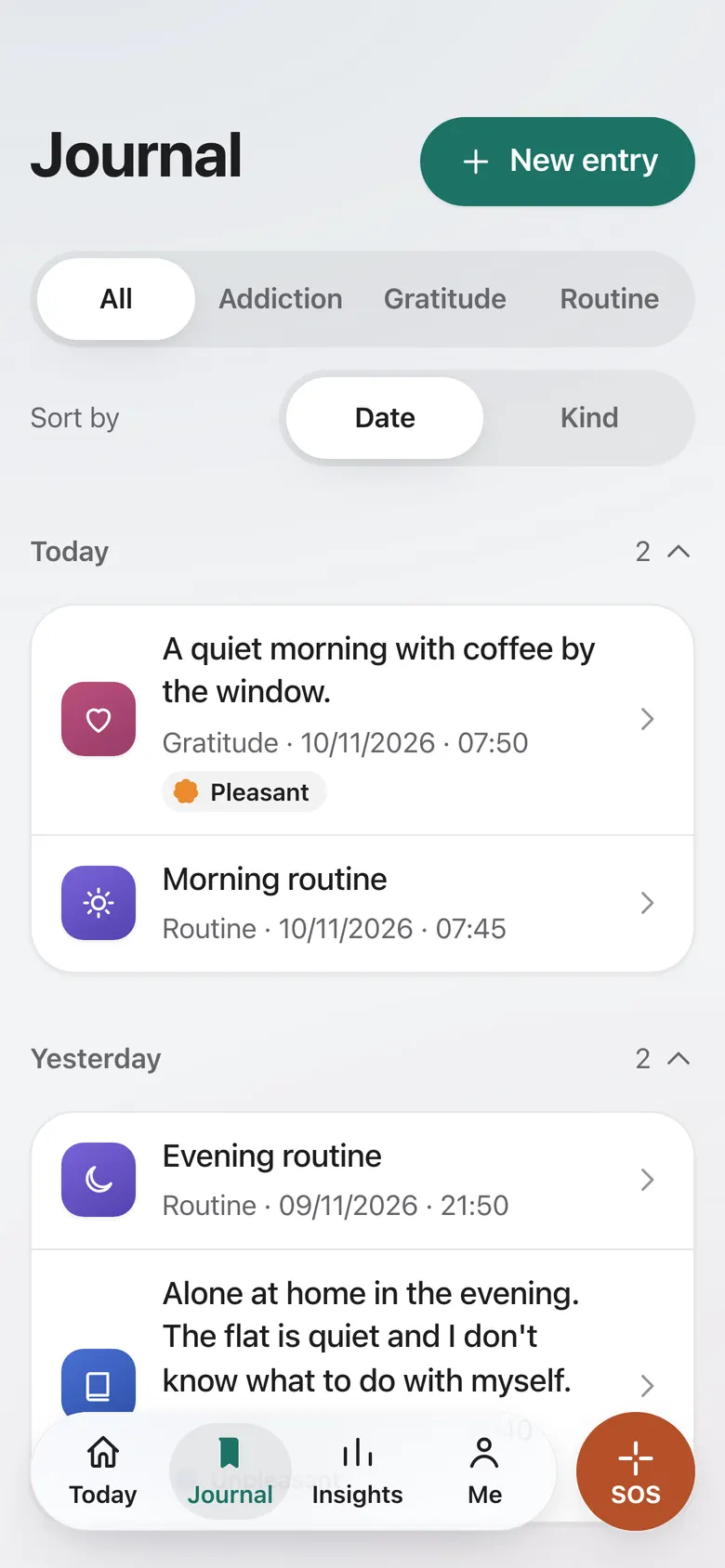
Entries grouped by time
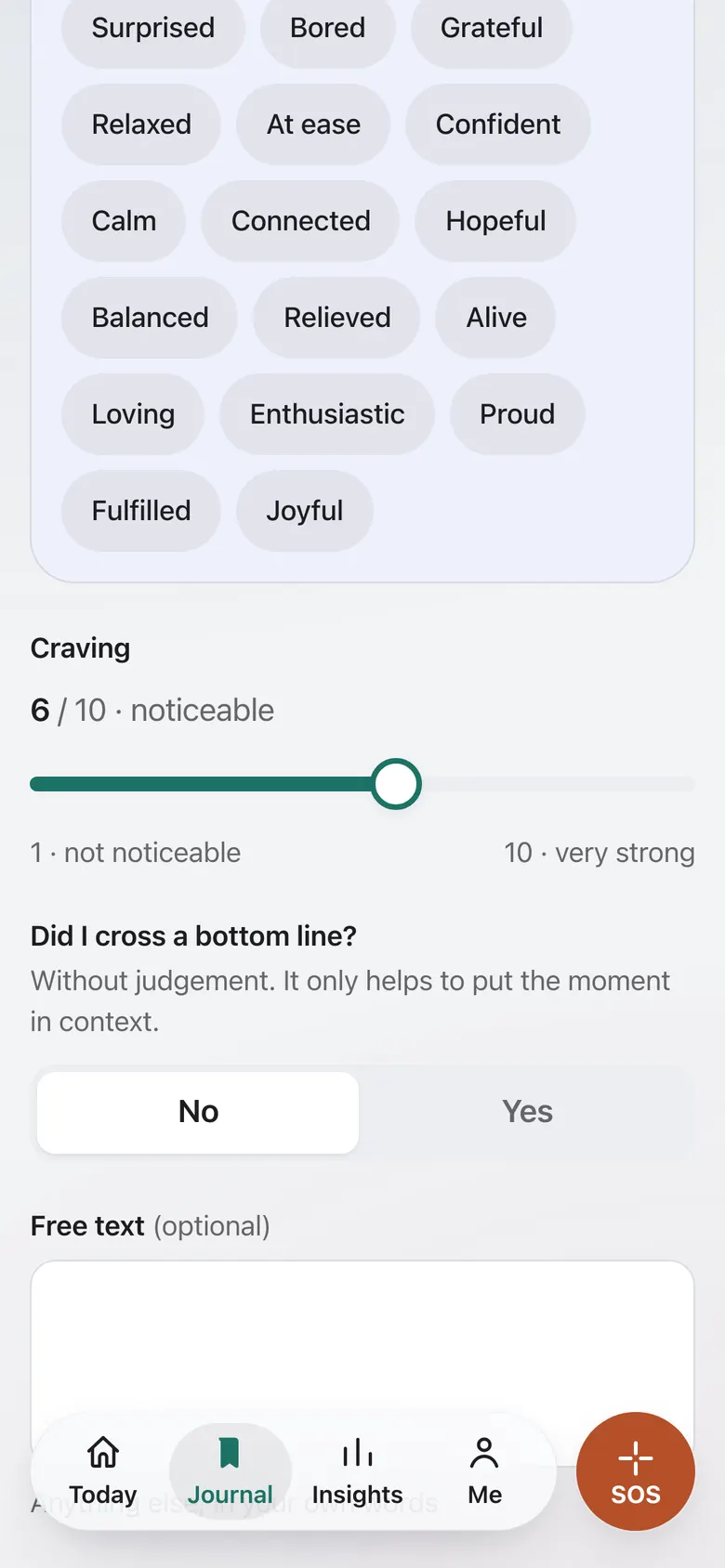
A new entry
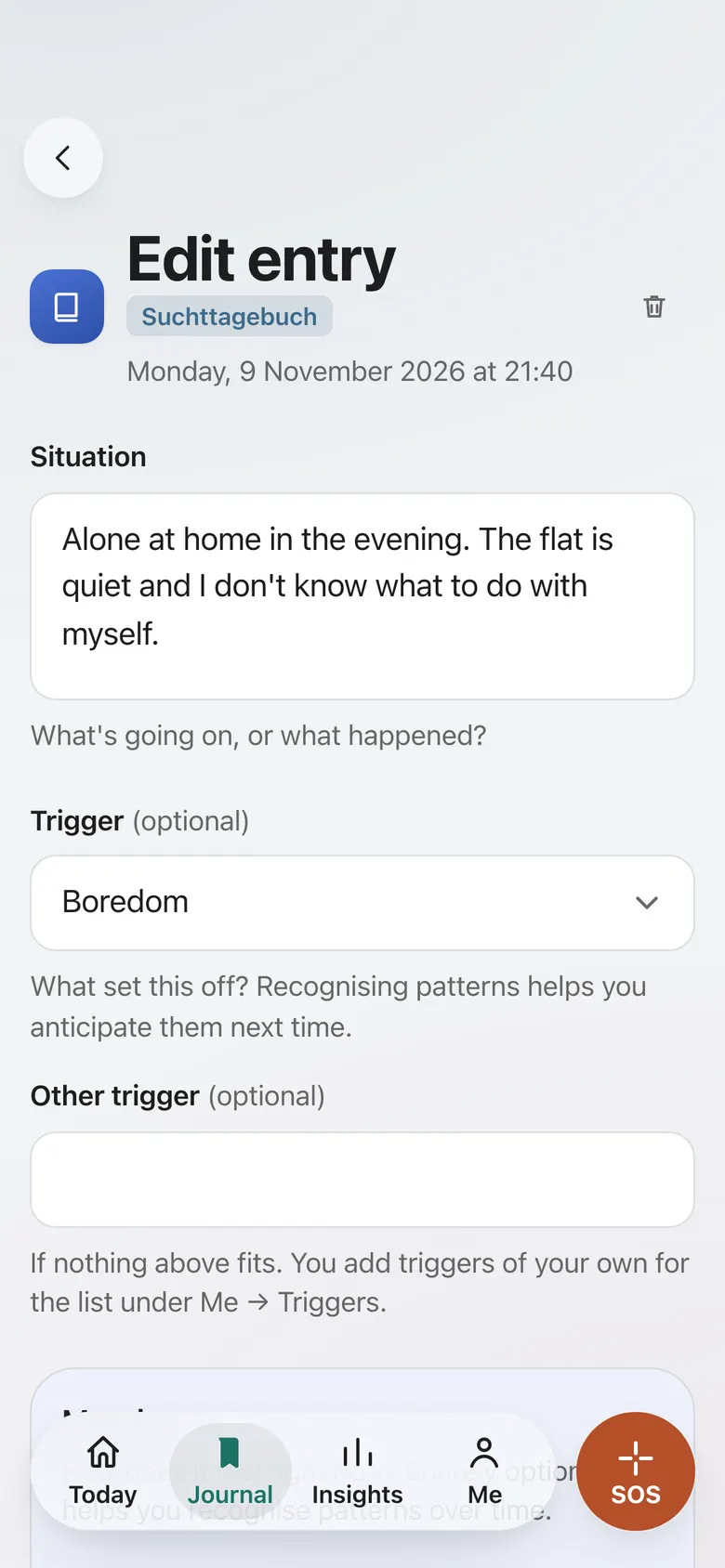
A completed entry


What the journal does
Three kinds of journal
Addiction journal, gratitude journal and routine entries, which appear when you finish a routine with notes. Filter: All, Addiction, Gratitude, Routine. You can sort by date or kind.
From situation to insight
For an entry you need the situation and the craving (1 to 10). Optional extras: a trigger from a list (with chosen focus areas, matching triggers are added under “Matching your focus areas”, and your own triggers, added under “Me”, come first), mood on five levels, feelings from a word list (none is “wrong”) and free text. Under “Add more details”: thoughts, feelings in your own words, body, need, action, insight, risk level.
Gratitude journal
You need two answers for an entry: “What am I grateful for in my life?” and “What was good today?” Mood and free text are voluntary.
Crossed a bottom line?
If so, you choose which ones. You can also save the situation as a risk situation. Anker handles it without blame: a difficult moment is not a failure.
Recently deleted
Deleted entries stay in the bin for 30 days and can be restored or deleted for good right away.
Keep reading on the blog
Start small. One check-in is enough.
Anker is free and runs in your browser and as a web app. There are no ads, no third-party tracking and no pressure.
If Anker has helped you and you would like to, you can voluntarily support its running and further development. Support Anker