Traffic-light system: your limits, in your words
Green, yellow, red, plus a plan you write yourself for every bottom line.
Why set limits beforehand?
In the moment of craving we tend to negotiate with ourselves. If you have written down beforehand where your limit is and what helps, you do not have to make it up on the spot.
Anker provides the structure, but not the content. You decide what goes here.
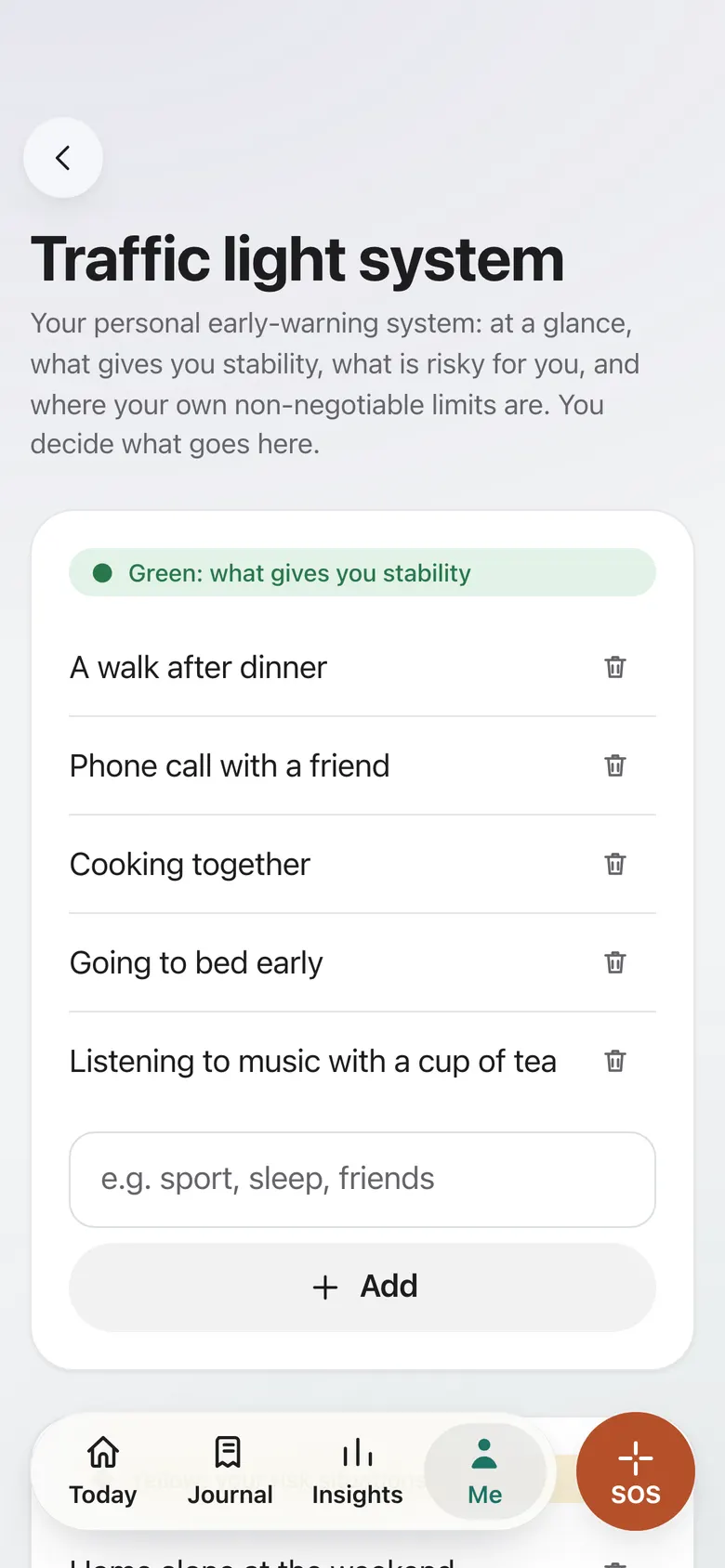
The traffic-light system
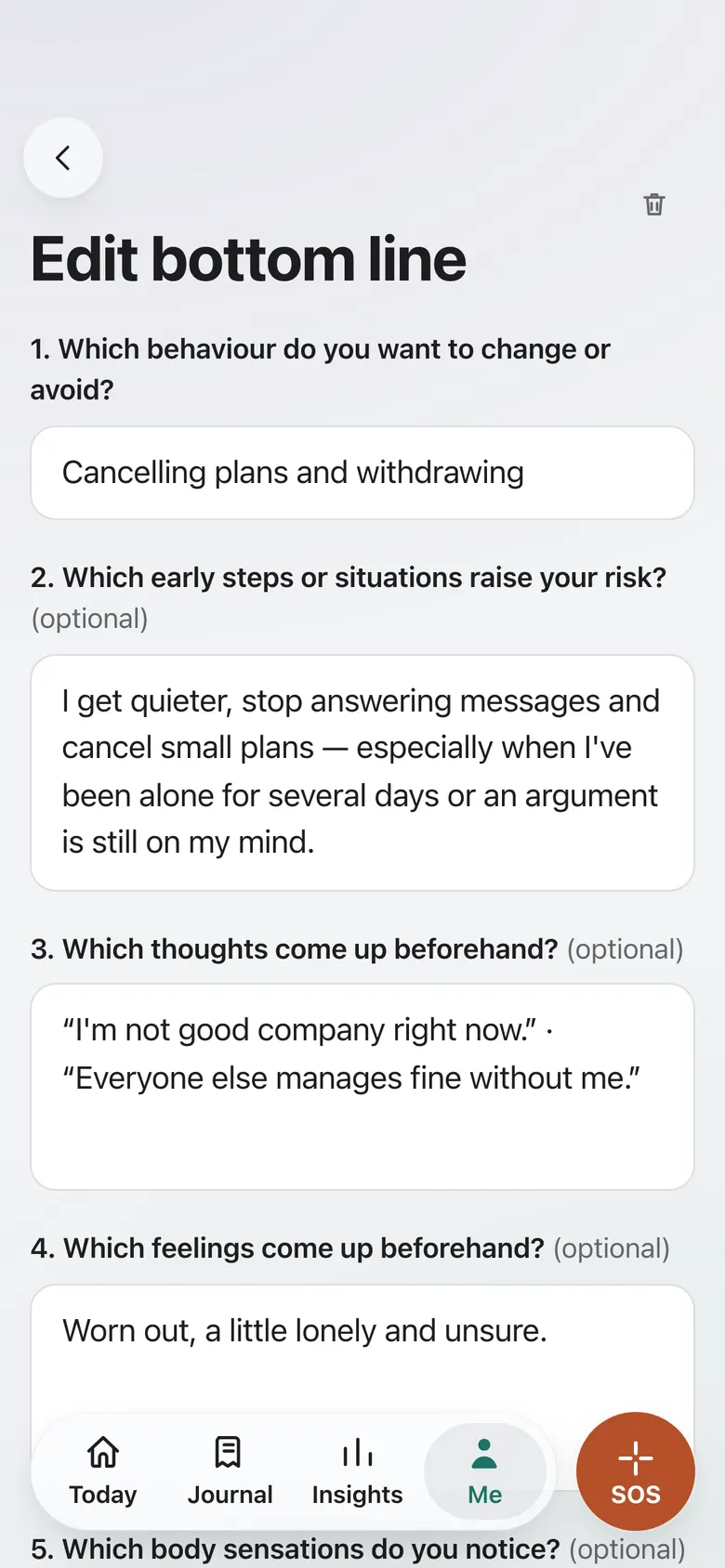
The plan for a bottom line


What the traffic-light system does
Green: what gives you stability
Situations, people and activities that steady you. Some of them are shown to you on Today as a daily-changing prompt.
Yellow: your risk situations
Situations in which it gets harder, for example alone at home or after an argument. You can also add them straight from a journal entry.
Red: your bottom lines
Behaviour you deliberately want to avoid, in your own words. You can already create a first bottom line when you get started. That is optional, like almost everything there. One question is enough to create one; you add the plan with the further questions via “Add a plan” if you like.
A plan in eight questions
Optional for each bottom line: what comes before it, which situations lead there? Which thoughts, feelings, body signals? What do you need, what is an alternative, and what happens when you notice you are already searching?
“Has something happened?”
Leads to the journal, with the question about the crossed bottom line already open. Without blame.
Keep reading on the blog
Start small. One check-in is enough.
Anker is free and runs in your browser and as a web app. There are no ads, no third-party tracking and no pressure.
If Anker has helped you and you would like to, you can voluntarily support its running and further development. Support Anker